



Manufacturing Bookkeeping Without an In-House Team
Posted Date: Feb 5th, 2026 at 07:06 AM
Location: Melbourne VIC 3000, Australia
Price: $0.00
Running a manufacturing business involves managing multiple moving parts every day. From purchasing raw materials to tracking labor costs and monitoring finished goods, financial management can quickly become complex. Many manufacturers struggle to maintain accurate records, especially without a dedicated in-house accounting team.
This is where outsourcing becomes a practical solution. Manufacturing bookkeeping services help businesses maintain accurate records, manage production costs, and stay compliant without the expense of hiring a full internal finance team. In this blog, we’ll explain how manufacturing bookkeeping works without an in-house team and why outsourcing can benefit your business.
What is Manufacturing Bookkeeping?
Manufacturing bookkeeping refers to maintaining financial records specifically for manufacturing businesses. Unlike service-based businesses, manufacturers deal with complex cost structures such as raw materials, production labor, overhead, and inventory.
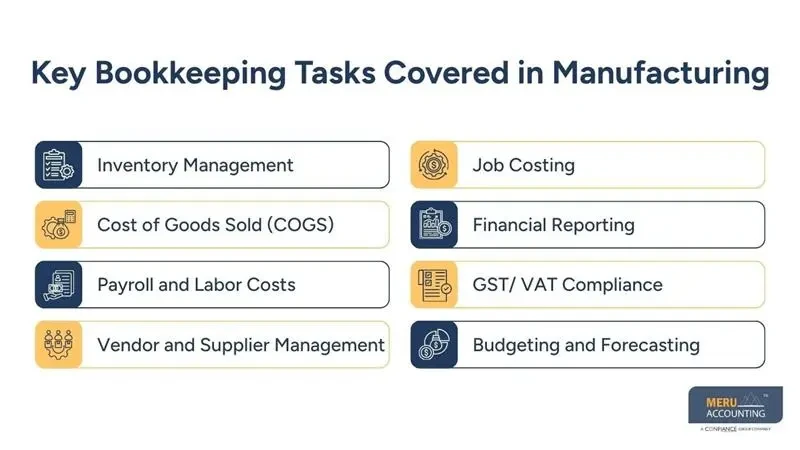
Effective manufacturing bookkeeping tracks:
Raw material purchases
Work-in-progress inventory
Finished goods
Payroll and labor costs
Production overhead
Cost of goods sold (COGS)
Sales and receivables
Without accurate bookkeeping, manufacturers may face incorrect profit calculations, inventory discrepancies, and poor financial decision-making.
Why Manufacturing Companies Need Specialized Bookkeeping
Manufacturing bookkeeping requires more detailed tracking than standard bookkeeping due to industry-specific challenges.
1. Complex Inventory Tracking
Manufacturers manage raw materials, work-in-progress, and finished goods. Accurate tracking ensures smooth production and prevents overstocking or shortages.
2. Cost Tracking
Both direct costs (materials and labor) and indirect costs (utilities, rent, maintenance) must be recorded correctly to determine real production costs.
3. Job Costing
Tracking cost per product, batch, or project is essential for accurate pricing and profitability analysis.
4. Compliance Requirements
Manufacturers must meet GST/VAT regulations, tax requirements, and financial reporting standards. Errors can lead to penalties and compliance issues.
Because of these complexities, manufacturing bookkeeping must be handled carefully to maintain financial accuracy.
Additional Details
| Business Type Supported | Meru Accounting |