






How to Track Progress Payments and Retention Using Bookkeeping for Construction Business
Posted Date: Feb 11th, 2026 at 09:08 AM
Location: Melbourne VIC 3000, Australia
Price: $0.00
Tracking progress payments and retention is one of the most important financial tasks in construction projects. Without proper bookkeeping for construction business, contractors often face delayed payments, cash flow issues, and disputes with clients.
Accurate bookkeeping helps contractors monitor payment schedules, manage retention amounts, and maintain clear financial records throughout the project lifecycle. With the right system in place, construction businesses can ensure steady cash flow and better financial control.
What You Will Learn From This Blog
In this blog, you will learn:
What progress payments and retention mean in construction
Why bookkeeping for construction business is essential for payment tracking
Common challenges contractors face in managing payments
How accurate bookkeeping reduces payment errors and disputes
Best practices to track progress payments and retention
How construction bookkeepers support payment management
How professional bookkeeping improves cash flow planning
What Are Progress Payments and Retention in Construction Projects
Progress payments are partial payments made to contractors at different stages of a construction project. These payments are typically linked to milestones, completed work, or a percentage of project completion.
Retention is a portion of the total payment withheld by the client until the project is completed successfully. This amount ensures the contractor completes the work properly and resolves any defects before final payment is released.
Progress payments help maintain steady cash flow during long projects, while retention protects clients from incomplete or poor-quality work. Proper bookkeeping for construction business ensures both progress payments and retention are tracked accurately to avoid confusion and disputes.
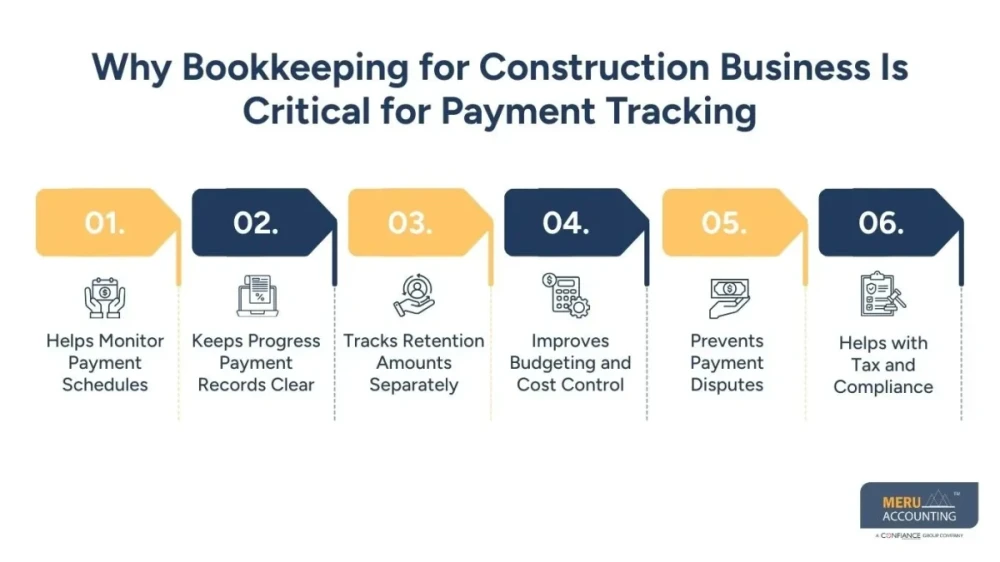
Why Bookkeeping for Construction Business Is Critical for Payment Tracking
Helps Monitor Payment Schedules
Accurate bookkeeping allows contractors to track payment deadlines and avoid missed or delayed payments.
Keeps Progress Payment Records Clear
Every progress payment is recorded properly, making it easy to know what has been received and what is still pending.
Tracks Retention Amounts Separately
Retention must be recorded separately from regular payments. Construction bookkeeping ensures retention balances and release dates are clearly tracked.
Improves Budgeting and Cost Control
With accurate payment records, contractors can compare income with expenses and maintain better project budgets.
Prevents Payment Disputes
Clear records provide proof of completed work and payment schedules, reducing the chances of disputes with clients.
Supports Tax and Compliance
Bookkeeping for construction business ensures accurate financial records for tax filing, audits, and compliance requirements.
Common Challenges Contractors Face When Managing Progress Payments
Missing Payment Due Dates
Without organized bookkeeping, contractors may miss payment deadlines and face cash flow issues.
Confusing Payment Tracking
Tracking multiple projects and milestones without proper records can lead to confusion.
Not Tracking Retention Separately
Mixing retention with regular payments causes errors and affects financial reporting.
Incorrect Invoice Records
Missing or inaccurate invoices can delay payments and create disputes.
Poor Communication Between Teams
Lack of coordination between site and finance teams leads to incomplete payment tracking.
Inadequate Documentation
Without proper documentation of completed work, clients may delay payments or question invoices.
Additional Details
| Business Type Supported | Meru Accounting |
