


 All Regions
 Australia
 Bermuda
 Brazil
 Canada
 France
 Italy
Italy
 Mexico
 United Kingdom
 United States

How to Manage Small and Mid-Size Law Firms Through Law Office Accounting
Posted Date: Feb 16th, 2026 at 05:01 PM
Location: New York, NY 10004, USA
Price: $0.00
Running a small or mid-size law firm requires more than legal knowledge. Strong financial management is equally important for stability and growth. Law office accounting helps law firms manage income, expenses, billing, and compliance while maintaining clear financial control.
With organized accounting processes, law firms can focus on serving clients while keeping their finances accurate and profitable.
Why Law Office Accounting Matters for Law Firms
Law firms deal with multiple financial responsibilities such as client billing, payroll, and compliance. Law office accounting ensures all financial activities are recorded properly and reviewed regularly.
Accurate accounting helps law firms:
Track income and expenses
Maintain client trust accounts
Monitor cash flow
Generate financial reports
Stay compliant with regulations
When financial records are clear and updated, decision-making becomes easier and more reliable.
Key Roles of Law Office Accounting in Firm Management
Tracking Income and Expenses
Proper tracking of revenue and expenses helps law firms understand their financial position. This ensures accurate reporting and better control over spending.
Managing Client Billing
Law office accounting supports accurate billing by tracking billable hours and generating invoices. Timely invoicing improves cash flow and reduces payment delays.
Financial Reporting
Regular reports such as profit and loss statements and balance sheets provide insights into firm performance. These reports help owners plan budgets and manage resources.
Monitoring Cash Flow
Cash flow monitoring ensures that the firm can cover salaries, rent, and operational costs without financial stress.
Compliance With Regulations
Law firms must follow tax rules and client trust account regulations. Proper accounting ensures compliance and reduces the risk of penalties.
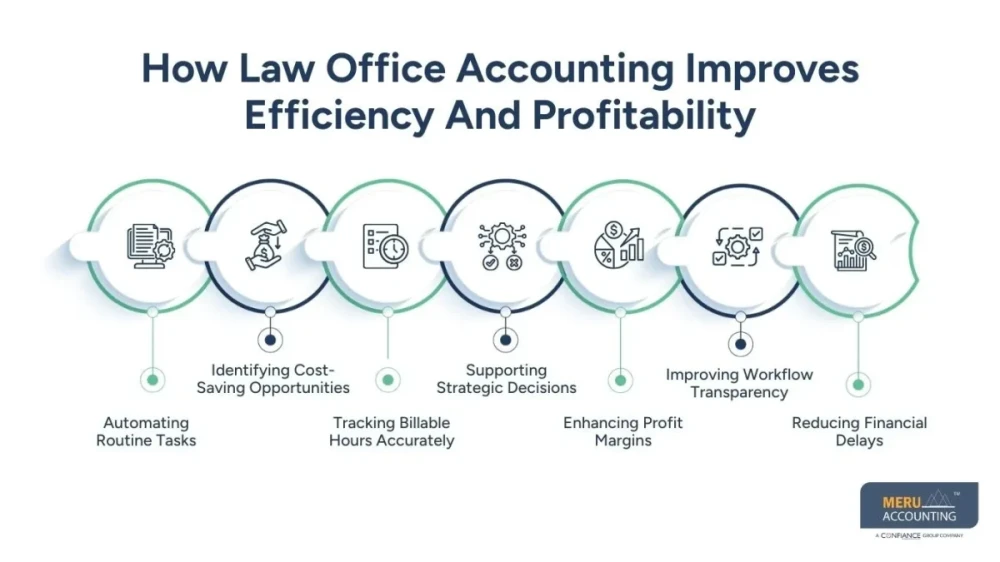
How Law Office Accounting Improves Efficiency and Profitability
Automation of Routine Tasks
Automated accounting systems reduce manual work and minimize errors. This saves time for lawyers and administrative staff.
Identifying Cost-Saving Opportunities
Detailed financial reports highlight unnecessary expenses. Firms can adjust spending to improve profitability.
Accurate Tracking of Billable Hours
Recording billable hours correctly ensures no revenue is missed. This directly increases firm income.
Supporting Strategic Decisions
Clear financial data helps law firm owners make informed decisions about hiring, expansion, and investments.
Improving Workflow Transparency
Organized financial records help teams understand where time and money are being spent, improving coordination.
Reducing Payment Delays
Efficient accounting speeds up invoicing and collections, helping maintain steady cash flow.
Common Financial Challenges for Small and Mid-Size Law Firms
Many law firms face financial management challenges such as:
Limited staff to handle accounting tasks
Complex billing structures for multiple clients
Payroll management difficulties
Strict compliance requirements
Maintaining consistent profitability
Irregular cash flow due to delayed payments
Law office accounting helps address these challenges by providing structure and clarity.
Essential Components of Law Office Accounting
Client Trust Accounting
Client funds must be tracked separately from firm funds. Proper trust accounting ensures transparency and compliance.
Accounts Receivable Management
Monitoring outstanding invoices helps law firms receive payments on time and maintain stable cash flow.
Expense Tracking
Recording all expenses helps control costs and evaluate profitability.
Payroll Management
Accurate payroll ensures employees are paid correctly and tax requirements are met.
Financial Reporting
Regular reports help law firm owners evaluate performance and plan future growth.
Benefits of Using Legal Accounting Solutions
Implementing legal accounting solutions offers several advantages:
Simplified bookkeeping processes
Time savings through automation
Clear financial visibility
Better compliance with regulations
Improved decision-making
These tools help law firms manage finances efficiently and reduce administrative workload.
Additional Details
| Business Type Supported | Meru Accounting |
