


 All Regions
 Australia
 Bermuda
 Brazil
 Canada
 France
 Italy
Italy
 Mexico
 United Kingdom
 United States

How Course Designers Determine Par in Golf
Posted Date: Jun 5th, 2026 at 04:40 PM
Location: USA Pkwy, Nevada, USA
Price: $0.00
When golfers step onto a tee box, they usually focus on making a good swing and achieving a strong score. What many players don't realize is that every hole has been carefully designed with a specific scoring expectation in mind. The number displayed on the scorecard isn't chosen randomly. It results from detailed planning, course architecture, and an understanding of how golfers typically play.
Understanding how designers establish Par in Golf offers valuable insight into course strategy, hole difficulty, and overall scoring. It also helps players appreciate the thought process behind every fairway, bunker, and green they encounter during a round.
Understanding the Purpose of Par
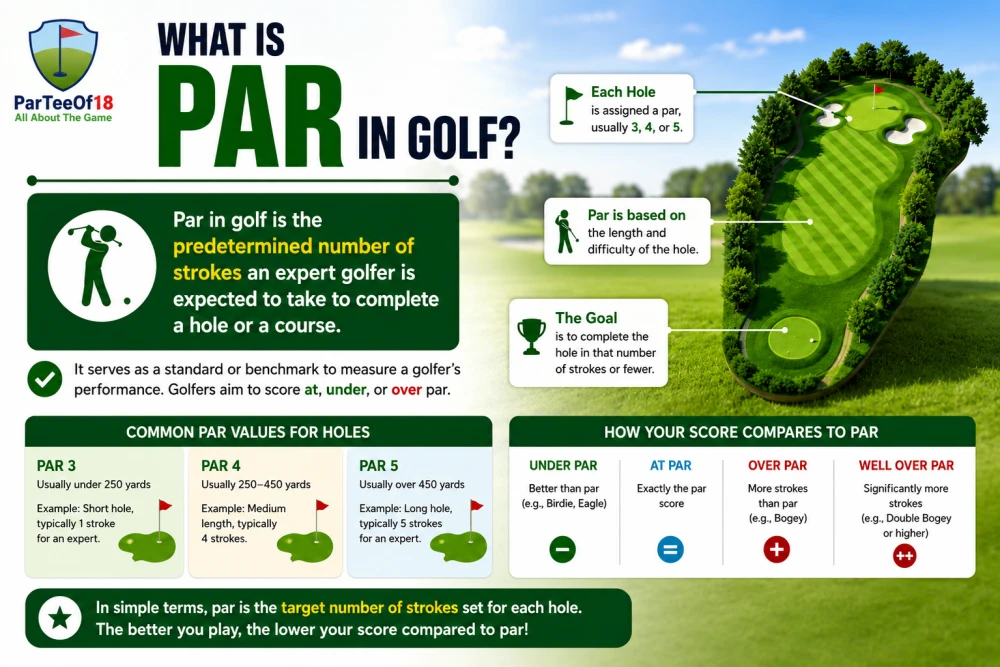
Par serves as the benchmark score for a hole. It represents the number of strokes a skilled golfer is expected to need to complete that hole under normal playing conditions.
Course architects and governing organizations use par to:
Create scoring standards
Measure hole difficulty
Maintain consistency across courses
Help golfers evaluate performance
Without par, comparing scores between players and courses would be much more difficult. It provides a universal framework that makes golf scoring meaningful and easy to understand.
The Foundation of Hole Design
Before determining a hole's par value, course designers focus on the overall layout.
Several factors influence hole creation:
Available land
Terrain features
Elevation changes
Environmental considerations
Natural hazards
Desired level of difficulty
Architects begin by deciding how a hole should play strategically. They may envision a risk-reward opportunity, a challenging approach shot, or a demanding tee shot. Once the design concept is established, they can evaluate the appropriate scoring expectation.
The goal is not simply to assign a number but to create a hole that challenges players in a fair and enjoyable way.
Distance as the Primary Factor
Length is the most important element when assigning par.
Generally speaking, the farther a hole measures, the more strokes golfers need to reach the green and complete the hole.
Typical guidelines include:
Par 3 Holes
These holes are designed so skilled golfers can typically reach the green with a single full shot.
Most par 3 holes range from:
100 to 250 yards
Players are expected to:
Reach the green in one shot
Take two putts
Total expected score: 3 strokes.
Par 4 Holes
Par 4 holes require an additional shot to reach the green.
Most range from:
250 to 470 yards
Golfers are expected to:
Hit a tee shot
Hit an approach shot
Use two putts
Total expected score: 4 strokes.
Par 5 Holes
Par 5 holes are significantly longer and often encourage strategic decision-making.
Most range from:
470 to 690 yards
Players generally need:
A drive
One or two advancing shots
An approach shot
Two putts
Total expected score: 5 strokes.
Distance provides the starting point, but it is only one piece of the equation.
Why Yardage Alone Doesn't Determine Difficulty?
Two holes with identical yardages may play completely differently.
Consider two 420-yard holes:
One is flat with a wide fairway.
The other includes water hazards, bunkers, and narrow landing areas.
Although both measure the same distance, the second hole is considerably more challenging.
Course designers understand this difference and evaluate multiple factors before finalizing scoring expectations.
The Impact of Elevation Changes
Elevation can dramatically affect how a hole plays.
Uphill Holes
Uphill holes effectively play longer than their listed yardage.
Golfers may need:
More club selection
Additional power
More precise execution
An uphill 400-yard hole may feel much longer than a flat 400-yard hole.
Downhill Holes
Downhill holes often play shorter.
Benefits include:
Increased ball carry
Longer rollouts
Easier approaches
Designers consider these factors when evaluating how difficult a hole will be for players.
The Role of Hazards
Hazards are essential tools for shaping strategy and influencing scoring.
Common hazards include:
Bunkers
Strategically placed bunkers force golfers to think carefully about club selection and shot placement.
Water Features
Lakes, ponds, rivers, and streams create risk-reward situations that can significantly impact scoring.
Trees
Tree-lined holes narrow target areas and punish inaccurate shots.
Rough
Thicker grass around fairways increases the difficulty of recovery shots.
Designers use hazards to create challenge without relying solely on length.
A shorter hole with well-placed hazards can be more difficult than a longer hole with open landing areas.
Green Design and Scoring Expectations
The green is where many strokes are gained or lost.
Course architects pay close attention to:
Green size
Slope
Speed potential
Surrounding hazards
Pin placement options
A large, relatively flat green allows easier putting opportunities.
In contrast, a smaller green with multiple tiers and significant slopes can dramatically increase scoring difficulty.
Because putting represents a major portion of golf scoring, green design plays a crucial role in determining how a hole performs over time.
Strategic Shot Values
Modern course architecture focuses heavily on strategy.
Rather than simply making holes longer, designers create situations where golfers must make decisions.
Examples include:
Attempting to carry a water hazard
Choosing between distance and accuracy
Taking aggressive or conservative lines
These choices influence scoring outcomes and contribute to the overall character of a hole.
Good architecture rewards thoughtful play while still allowing multiple ways to succeed.
Testing and Evaluation Before Opening
New golf courses undergo extensive evaluation before opening to the public.
Architects and golf professionals often:
Play test holes repeatedly
Analyze scoring patterns
Measure landing zones
Review shot requirements
If a hole consistently plays easier or harder than intended, adjustments may be made.
These changes can include:
Moving tees
Repositioning bunkers
Modifying fairways
Altering green contours
The objective is to ensure each hole aligns with the intended challenge level.
How Governing Bodies Influence Par?
Organizations such as the United States Golf Association and the R&A provide guidelines that help maintain consistency across golf courses.
These organizations consider:
Hole length
Playing characteristics
Skill level assumptions
Course rating standards
Their recommendations help course operators establish fair scoring benchmarks while maintaining comparability between different venues.
Technology's Role in Modern Course Design
Today's architects have access to tools that previous generations could only imagine.
Modern technology allows designers to:
Create digital terrain models
Simulate shot patterns
Analyze drainage systems
Evaluate player performance data
Technology has also changed how golfers analyze rounds. Many players use a golf scoring app to monitor performance, identify strengths and weaknesses, and evaluate scoring trends over time.
A reliable golf scoring app can reveal how players perform on various hole types, helping them better understand the design challenges presented by different courses.
Why Understanding Course Design Helps Golfers?
Learning how holes are designed can improve decision-making on the course.
Golfers who understand architectural intent often:
Choose smarter targets
Avoid unnecessary risks
Develop better course management
Improve scoring consistency
Instead of viewing a hole simply as a number on a scorecard, players begin to recognize the strategic elements influencing each shot.
This awareness leads to more thoughtful play and often better results.
Final Thoughts
Determining Par in Golf involves far more than measuring distance. Course designers carefully evaluate length, terrain, hazards, elevation, green complexity, and strategic options before assigning a scoring benchmark. Every hole reflects a balance between challenge, fairness, and playability.
The next time you stand on a tee box, remember that every bunker, fairway contour, and green slope was placed with purpose. Understanding how designers establish scoring expectations not only deepens appreciation for the game but also helps golfers make smarter decisions and enjoy the course from a completely new perspective.
FAQs
1. What is the main factor used to determine par on a golf hole?
Distance is the primary factor. Designers first evaluate hole length and then consider hazards, elevation, and playing difficulty.
2. Can two holes with the same yardage have different difficulty levels?
Yes. Hazards, green design, elevation changes, and fairway width can make one hole significantly harder than another of the same length.
3. Why are par 3 holes shorter than par 4 and par 5 holes?
Par 3 holes are designed so skilled golfers can reach the green in one shot, while longer holes require additional shots.
4. Do hazards affect how designers assign par?
Yes. Water hazards, bunkers, trees, and rough influence the overall challenge and strategic requirements of a hole.


