


 All Regions
 Australia
 Bermuda
 Brazil
 Canada
 France
 Italy
Italy
 Mexico
 United Kingdom
 United States

Why Accurate Construction Accounting Is Essential for Successful Project Delivery
Posted Date: Feb 17th, 2026 at 03:47 PM
Location: New York, NY 10004, USA
Price: $0.00
Accurate construction accounting plays a vital role in helping construction companies complete projects on time, within budget, and with maximum profitability. Construction projects involve multiple cost components, long timelines, and complex financial planning, making proper financial tracking more critical than ever.
By implementing effective construction accounting practices, businesses can maintain clear financial records, monitor expenses, and make informed decisions that directly influence project success. It also helps identify financial risks early, allowing companies to take corrective action before issues escalate.
What Is Construction Accounting?
Construction accounting is a specialized accounting method focused on tracking financial activities related to individual construction projects. Unlike traditional accounting, it emphasizes project-based cost tracking, job costing, revenue recognition, payroll management, and budgeting.
This approach ensures that each project’s income and expenses are monitored separately, giving companies a clear picture of profitability and resource allocation. With proper construction accounting systems in place, businesses can avoid financial errors, maintain budgets, and deliver projects efficiently.
Importance of Accurate Financial Records in Construction
Prevent budget overruns
Accurate construction accounting helps track every expense, ensuring projects remain within budget and preventing unnecessary overspending.
Monitor cash flow
Managing incoming and outgoing payments is essential for smooth project execution. Proper accounting ensures sufficient funds are available at each project stage.
Ensure compliance
Maintaining precise records helps construction companies stay compliant with tax regulations and industry standards, reducing legal and financial risks.
Support better decisions
Reliable financial data allows project managers to make informed decisions regarding resource allocation, cost control, and planning.
Build client trust
Transparent construction accounting improves client confidence and strengthens long-term business relationships.
Key Differences Between Construction Accounting and Traditional Accounting
Construction accounting focuses on project-level financial tracking, while traditional accounting manages overall business finances. Construction accounting requires detailed cost allocation, milestone-based revenue recognition, and ongoing updates for long-term projects. It also provides specialized reports related to labor, materials, and project profitability, which are not typically included in standard accounting systems.
Role of Construction Project Accounting in Project Success
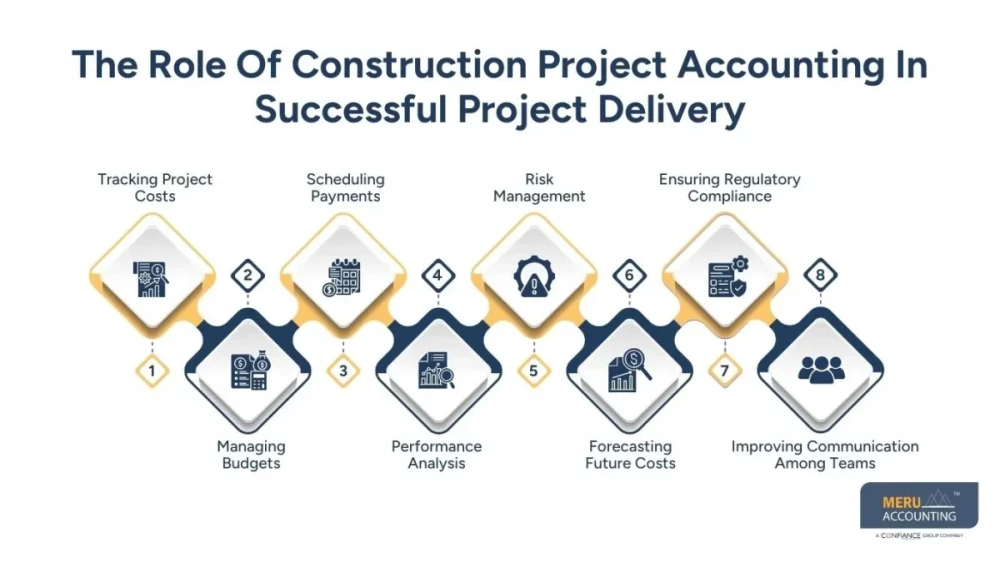
Tracking project costs
Construction accounting ensures all expenses, including labor, materials, and equipment, are tracked accurately for each project.
Budget management
Proper financial tracking helps companies maintain budgets and avoid unexpected financial setbacks.
Payment scheduling
Timely payments to suppliers and subcontractors are essential for smooth project progress and strong vendor relationships.
Performance analysis
Financial data helps identify inefficiencies and improve planning for future projects.
Risk management and forecasting
Construction accounting allows companies to forecast future costs, identify risks, and plan resources effectively.
Regulatory compliance
Accurate records ensure compliance with tax and legal requirements, preventing penalties and delays.
Benefits of Accurate Construction Accounting
Improved profitability through precise cost tracking
Better cash flow management for smooth project execution
Fewer financial errors and disputes
Clear insights into project performance
Simplified tax filing and compliance
Common Challenges in Construction Project Accounting
Construction companies often face challenges such as managing multiple projects, tracking labor costs, handling material price fluctuations, monitoring equipment expenses, and dealing with delayed billing. Effective construction accounting systems help overcome these issues by providing accurate financial visibility and structured processes.
Best Practices for Effective Construction Accounting
Use project-based construction accounting software
Maintain detailed and organized financial records
Review financial reports regularly
Train staff on proper accounting procedures
Keep project and company finances separate
How Meru Accounting Supports Construction Companies
Managing construction finances can be complex, but expert support can simplify the process. Professional construction accounting services help track costs, manage payroll, generate customized reports, and ensure compliance with regulations.
With specialized knowledge and efficient systems, construction companies can improve cost management, reduce errors, and achieve successful project delivery. Accurate construction accounting ultimately ensures better financial control, stronger client relationships, and long-term business growth.
Additional Details
| Business Type Supported | Meru Accounting |
