



Real Estate Development Accounting: A Complete Guide
Posted Date: Apr 22nd, 2026 at 06:20 AM
Location: New York, NY 10004, USA
Price: $0.00
Real estate development accounting is the process of tracking, managing, and analyzing financial transactions throughout a property project—from land acquisition to construction and final sale. Because projects are long-term and capital-intensive, accurate accounting is essential for maintaining control, profitability, and compliance.
What Is Real Estate Development Accounting?
Real estate development accounting focuses on project-based financial management. It includes tracking land costs, construction expenses, loans, and revenue timing. Unlike regular accounting, most costs occur before income is generated, making planning and monitoring critical.
Key Stages in Real Estate Accounting
- Pre-Development Phase: Includes land purchase, legal fees, permits, and design costs
- Construction Phase: Tracks labor, materials, contractor costs, and work-in-progress
- Sales/Lease Phase: Manages revenue recognition based on project completion or sales
- Close-Out Phase: Final cost adjustments and profit evaluation
Key Features of Real Estate Development Accounting
- Project-Based Tracking: Each project has separate financial records
- Cost Allocation: Differentiates between capital costs and operational expenses
- Cash Flow Management: Ensures sufficient funds across all stages
- Loan & Interest Tracking: Monitors financing and borrowing costs
- Revenue Recognition: Records income based on legal and accounting standards
Benefits of Real Estate Development Accounting
- Better Financial Control: Tracks expenses and prevents cost overruns
- Improved Decision-Making: Provides real-time financial insights
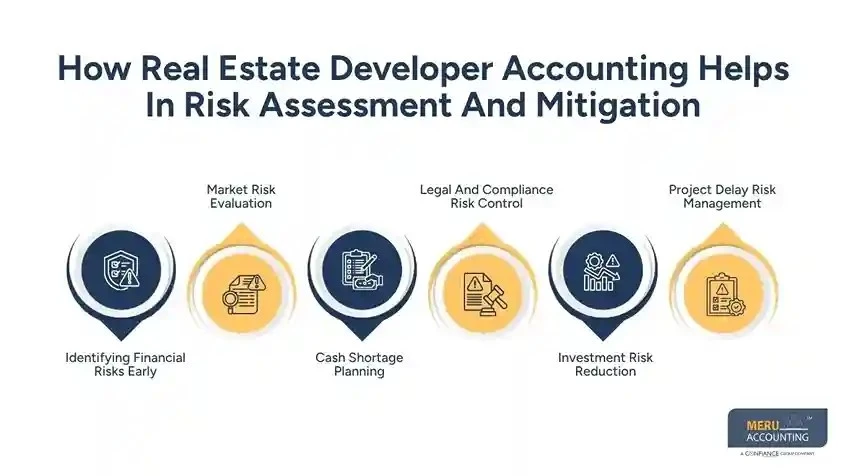
- Risk Management: Identifies issues like delays or budget gaps early
- Investor Confidence: Transparent reporting builds trust with stakeholders
- Regulatory Compliance: Ensures proper tax and legal adherence
Best Practices to Follow
- Maintain separate accounts for each project
- Use accrual accounting for accurate financial reporting
- Track budgets and compare with actual costs regularly
- Keep detailed documentation for audits and compliance
- Use accounting software or ERP systems for automation and reporting
Conclusion
Real estate development accounting is essential for managing complex property projects successfully. By maintaining accurate records, monitoring costs, and following best practices, developers can reduce risks, improve profitability, and ensure long-term project success.
Meru Accounting provides structured financial support for real estate firms and developers. The team works with real estate development accounting systems to improve accuracy in cost tracking, reporting, and planning. With strong experience in global accounting standards, Meru Accounting also supports property developer accounting needs for firms handling multiple projects.
Additional Details
| Service Type (Monthly / Annual / One-time) | Monthly / Annual |
| Business Type Supported | Retail, Manufacturing, Finance |