






How Cost Accounting Helps Manufacturers Reduce Costs and Increase Margins
Posted Date: Feb 23rd, 2026 at 05:58 AM
Location: New York, NY 10004, USA
Price: $0.00
Manufacturing businesses deal with many expenses such as raw materials, labor, equipment, and factory overhead. Without proper tracking, these costs can quickly reduce profits. Cost accounting helps manufacturers understand exactly where money is going so they can control spending and protect margins.
By reviewing production costs regularly, businesses can find savings opportunities, reduce waste, and make better pricing decisions. Strong cost tracking also helps companies stay stable even when expenses change.
What Cost Accounting Means for Manufacturers
Cost accounting focuses on recording and reviewing all costs involved in making products. It gives a detailed view of production expenses, unlike basic bookkeeping which mainly records overall financial activity.
With clear cost information, manufacturers can manage resources better, plan production efficiently, and avoid unnecessary spending. Tracking costs at each stage also helps identify problems early before they grow.
Why Cost Accounting Is Important
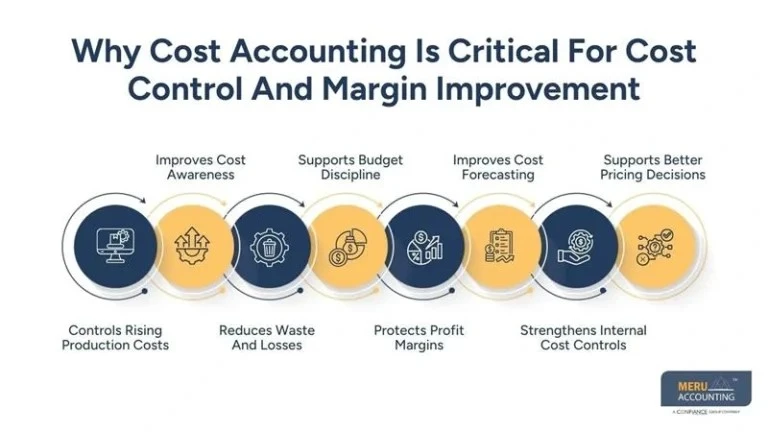
Cost accounting helps businesses:
- Spot increases in material, labor, and overhead costs early
- Understand how money is spent across departments
- Reduce waste and improve efficiency
- Create realistic budgets based on actual cost patterns
- Keep profit margins stable during cost changes
- Set prices with confidence using accurate cost data
Understanding Manufacturing Costs
Manufacturers must track different types of costs, including:
- Raw materials that directly affect product cost
- Labor expenses tied to production output
- Factory overhead like utilities and maintenance
- Fixed and variable costs that change with production levels
Knowing these costs clearly helps businesses plan better and protect profitability.
Methods Used in Cost Accounting
Manufacturers use different approaches depending on their operations, such as tracking costs per job, averaging costs across large production runs, comparing expected costs with actual spending, and reviewing cost differences to find issues.
These methods help improve accuracy and highlight areas where improvements are needed.
How Cost Accounting Controls Expenses
Cost accounting supports better cost control by:
- Monitoring material usage to reduce waste
- Tracking labor hours to manage productivity
- Allocating overhead correctly across products
- Comparing actual spending with budgets
- Reviewing costs regularly to maintain discipline
These steps help businesses keep spending under control and avoid surprises.
Improving Pricing and Margins
When companies know the true cost of each product, they can set prices that cover expenses and support healthy margins. Cost accounting also helps avoid selling products at a loss and allows businesses to adjust prices when costs change.
Clear cost data also strengthens customer price discussions by providing solid cost breakdowns.
Better Planning and Inventory Control
Cost accounting improves planning by helping businesses estimate material needs, track unfinished goods, and value finished products correctly. This reduces excess inventory and lowers storage costs while keeping production aligned with demand.
Improving Efficiency
Cost reports highlight areas where resources may be wasted or processes are inefficient. With these insights, businesses can improve workflows, plan maintenance, and reduce delays, leading to smoother operations.
Risks of Not Using Cost Accounting
Without cost accounting, manufacturers may face poor cost visibility, incorrect pricing, rising expenses, weak budgeting, and unstable profit margins. Lack of clear cost data makes decision-making more difficult and risky.
Meru Accounting supports manufacturers by providing structured cost accounting and reliable cost control support.
Key Takeaways
- Cost accounting helps manufacturers understand and control production expenses
- Accurate cost data supports better pricing and stronger margins
- Clear cost tracking improves budgeting and planning
- Structured cost systems increase financial visibility
- Strong cost control supports long-term business growth
