






How Accounting for Manufacturing Reduces Cost Overruns
Posted Date: Jan 29th, 2026 at 07:47 AM
Location: New York, NY 10004, USA
Price: $0.00
Cost overruns are one of the main reasons manufacturing businesses lose profit. Even when sales are strong, profits can shrink when production costs rise without warning. This is where accounting for manufacturing becomes essential.
Good accounting helps manufacturers track spending during production, control waste, and catch budget problems early. It’s not just about recording numbers later—it’s about knowing where money is going in real time so costs don’t get out of control.
In this blog, we explain how accounting for manufacturing helps reduce cost overruns and supports long-term stability.
What You Will Learn From This Blog
You will learn:
- What cost overruns mean in manufacturing
- Why cost overruns happen without proper tracking
- How accounting for manufacturing improves cost control
- How hidden costs are uncovered
- How labor and factory expenses can be managed better
- How updated financial data helps prevent overspending
- Why outsourcing manufacturing accounting can help reduce overruns
What Are Cost Overruns in Manufacturing?
A cost overrun happens when the real cost of production becomes higher than the planned cost. This can occur due to:
- rising raw material prices
- extra labor hours
- frequent machine repairs
- high utility bills and factory expenses
- waste, scrap, and rework
Without accounting for manufacturing, these issues may stay unnoticed until profits drop.
Why Cost Overruns Happen Without Proper Accounting
When businesses rely on estimates instead of real numbers, cost overruns become common. Main causes include:
No detailed cost tracking
If costs aren’t tracked by product, batch, or department, it’s hard to see where money is being lost.
Weak budget control
Budgets become guesswork when past cost data is unclear.
Late financial updates
If costs are reviewed only monthly, teams react too late.
No accountability
When costs aren’t broken down clearly, departments may overspend without realizing it.
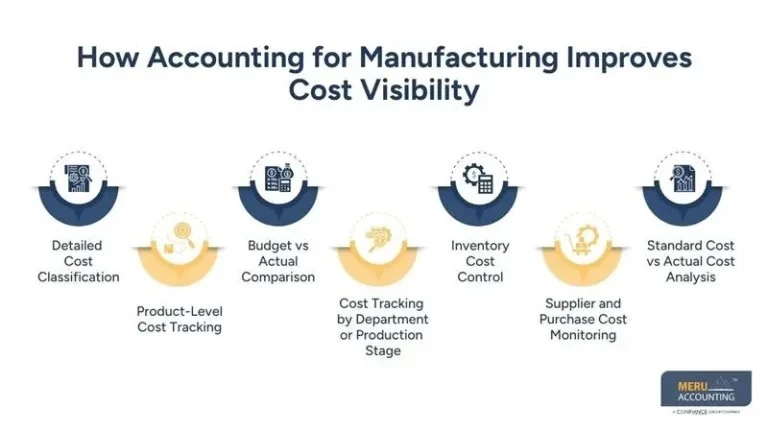
How Accounting for Manufacturing Improves Cost Visibility
When costs are recorded properly, manufacturers can see exactly where money is being spent.
Clear cost categories
Accounting for manufacturing separates spending into areas like:
- materials
- labor
- factory running costs
- work in progress
- finished goods
Tracking cost per product
This shows which products cost more than expected to produce.
Budget vs actual review
Regular comparison helps catch overruns early and fix problems faster.
Department-level tracking
Manufacturers can see which team or stage of production is driving extra cost.
Better inventory control
Accurate inventory records reduce shortages, overstocking, and storage costs.
Supplier cost monitoring
Tracking supplier prices helps prevent overpaying and supports better negotiation.
Finding Hidden Costs Through Accounting
Many losses come from costs that don’t get noticed quickly. Accounting for manufacturing helps bring these costs into view, such as:
- scrap and rework
- machine downtime
- small supply purchases that add up over time
- energy waste
- inventory storage and handling costs
Once these costs are visible, they can be reduced.
Managing Labor and Factory Expenses
Labor and factory running costs are often the biggest expenses in manufacturing. With accounting for manufacturing, businesses can:
- track labor hours by job or department
- identify overtime problems
- measure productivity
- allocate factory expenses fairly across products
- review department spending and reduce unnecessary costs
This prevents labor and overhead costs from quietly rising.
How Updated Data Helps Reduce Overspending
When businesses have current cost information, they can act faster. This helps by:
- giving early warning when costs rise
- supporting smarter purchasing decisions
- improving production planning
- correcting problems immediately instead of later
- keeping cash flow stable
How Outsourced Accounting for Manufacturing Helps Prevent Overruns
Many manufacturers outsource accounting because it improves accuracy and saves internal time. Outsourcing helps by:
- providing experienced manufacturing accounting support
- tracking costs consistently and regularly
- reducing mistakes caused by manual work
- improving budgeting and planning
- keeping records clean and ready for audits
Outsourcing offers strong cost control without hiring extra staff.
Why Choose Meru Accounting?
Meru Accounting supports manufacturers with accurate tracking and clear reporting, helping control production costs. We provide:
- detailed cost tracking and reporting
- inventory and work-in-progress tracking
- labor and factory expense review
- budget creation and monitoring
- customized systems for your production process
- outsourced accounting support for ongoing cost control
Key Takeaways
- Cost overruns reduce profit and create cash flow pressure
- Accounting for manufacturing helps track spending and control production costs
- Better visibility makes it easier to catch problems early
- Hidden costs like scrap, downtime, and storage can be reduced
- Updated financial data prevents overspending
- Outsourcing manufacturing accounting can improve accuracy and cost control
