



How Accounting for Manufacturing Companies Supports Better Pricing and Margin Decisions
Posted Date: Jan 30th, 2026 at 05:43 AM
Location: New York, NY 10004, USA
Price: $0.00
Manufacturing is not just about producing goods—it’s about controlling costs at every stage. A single product can involve raw materials, labor, machine time, factory overhead, storage, and delivery. If these costs are not tracked correctly, pricing becomes a guess. And when pricing is based on guesses, profit margins usually suffer.
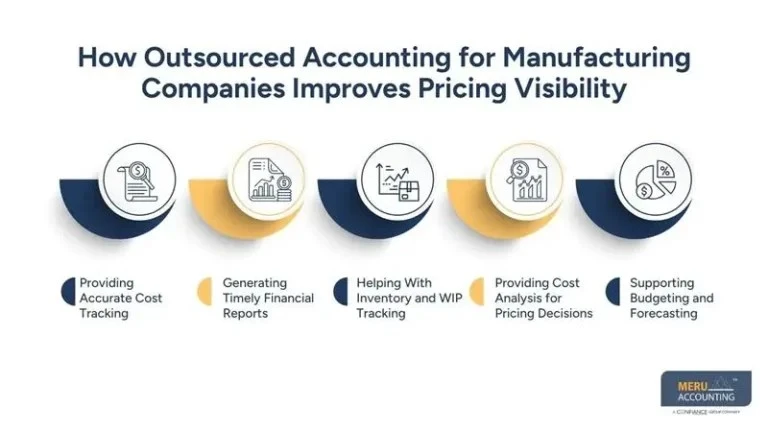
That’s why accounting for manufacturing companies plays a major role in setting the right prices and making better margin decisions. It helps manufacturers understand the true cost of each product, so they can price confidently and stay profitable.
Why pricing becomes difficult in manufacturing
Many manufacturers focus mainly on raw material cost, but the real cost of production includes much more, such as:
- Direct materials (raw materials, components, packaging)
- Direct labor (workers involved in production)
- Manufacturing overhead (rent, utilities, maintenance, supervision, quality checks)
- Waste and scrap (damaged materials, rejected items)
- Inventory holding costs (storage, insurance, handling)
Without proper tracking, these expenses get missed or underestimated, causing products to be priced too low.
How accounting for manufacturing companies improves cost accuracy
Accurate costing is the base of strong pricing. Accounting for manufacturing companies improves accuracy by helping businesses:
- record material usage per product
- track labor hours and overtime correctly
- monitor machine usage and production time
- record overhead costs consistently
- capture waste, scrap, and rework costs
This makes product costing more reliable, which leads to better pricing and stronger margins.
Identifying profitable and unprofitable products
Not every product earns the same profit. Some products may look successful because they sell well, but they may actually have high hidden costs.
With accounting for manufacturing companies, manufacturers can compare:
- sales revenue
- total production cost
- overhead share
- profit per unit
This helps companies decide whether to:
- raise prices
- reduce production costs
- improve the product process
- stop producing low-margin items
Inventory and WIP tracking supports better pricing decisions
Inventory is a major part of manufacturing. If inventory records are wrong, profit numbers become misleading.
- Overvalued inventory can make profit look higher than it is → leads to underpricing
- Undervalued inventory can make profit look lower than it is → leads to overpriced products
Work-in-progress (WIP) tracking is also important because it shows the real cost of unfinished products and helps measure production efficiency.
Controlling overhead to protect margins
Overhead costs often increase quietly and are harder to track than direct costs. Accounting for manufacturing companies helps monitor overhead like:
- factory utilities
- equipment maintenance
- indirect labor
- rent and facility expenses
When overhead is tracked properly, it can be allocated fairly across products—so pricing reflects the full cost of production.
Key reports that guide pricing and margin decisions
Manufacturing accounting provides reports that directly support smarter pricing, including:
- COGS report (true production cost)
- Gross margin report (profit after production cost)
- Inventory valuation report (accurate stock value)
- WIP report (cost of unfinished goods)
- Product profitability report (profit by product line)
Why Choose Meru Accounting for Manufacturing Accounting Services?
At Meru Accounting, we understand how critical accurate cost tracking is for manufacturing companies.
Final takeaway
In simple terms, accounting for manufacturing companies gives manufacturers clear cost visibility. It shows what each product truly costs, what profit it generates, and where margins are being lost. With this information, businesses can price products correctly, control overhead, and focus on the most profitable production decisions.