


How a Cost Accountant Helps Manufacturers Stay Competitive in Uncertain Markets
Posted Date: Feb 16th, 2026 at 05:50 AM
Location: New York, NY 10004, USA
Price: $0.00
Manufacturing companies often deal with changing costs, supply delays, and shifting customer demands. A cost accountant helps businesses handle these challenges by tracking expenses clearly and keeping finances organized.
With accurate cost information, businesses can make better decisions, control spending, and protect profits even when market conditions are unstable.
This guide explains how a cost accountant supports daily operations, improves pricing decisions, and helps companies plan for long-term success.
What You’ll Learn
- How a cost accountant supports daily operations and long-term planning
- How tracking and reviewing costs helps control expenses
- How changes in material, labor, and overhead costs affect production
- Why clear cost visibility is important during uncertain times
- How reliable cost data improves planning and financial control
- How small cost improvements can lead to better results
Understanding Market Uncertainty in Manufacturing
Raw material price changes can quickly increase production costs, so regular monitoring is important.
Supply chain delays often add extra expenses, making it important to measure their impact.
Labor cost increases from wages and overtime can raise overall costs, so tracking efficiency helps control spending.
Energy and utility price changes directly affect total expenses, making accurate cost tracking essential.
Customer price pressure means businesses need clear cost data to set realistic prices.
Why a Cost Accountant Matters
A cost accountant helps businesses by:
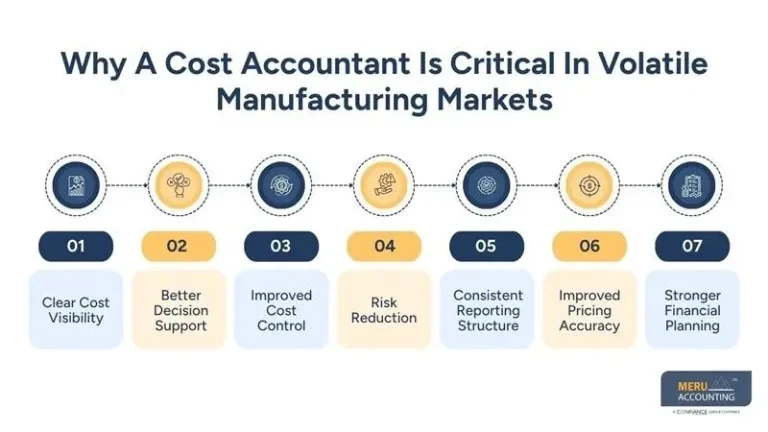
- Providing clear visibility into all expenses
- Supporting better decisions with accurate reports
- Identifying areas where costs can be reduced
- Improving pricing accuracy
- Reducing financial risks
- Supporting stronger planning and budgeting
Key Cost Accounting Basics
- Separating direct and indirect costs to understand spending
- Setting cost benchmarks and reviewing differences
- Assigning overhead costs fairly
- Reviewing spending regularly to stay within limits
How a Cost Accountant Helps Reduce Production Costs
- Tracking material usage to reduce waste
- Monitoring labor efficiency
- Reviewing processes to find savings
- Analyzing supplier pricing trends
- Reporting cost changes to management
Better Pricing With Accurate Cost Data
A cost accountant helps calculate the true cost of products, review profit margins, and determine minimum pricing levels. This helps businesses stay competitive without losing money.
Managing Inventory Costs
Proper stock valuation, reviewing slow-moving items, and tracking material usage help reduce storage costs and prevent excess inventory.
Improving Profit Margins
Accurate cost allocation shows which products and departments are most profitable, helping businesses focus on areas that deliver better returns.
Budgeting and Forecasting
A cost accountant prepares realistic budgets, updates forecasts as costs change, and plans for different scenarios to reduce financial risk.
Key Takeaways
- Clear cost tracking leads to better decisions
- A cost accountant helps manage uncertainty
- Proper cost allocation protects profit margins
- Accurate cost data supports smarter pricing
- Strong cost management improves long-term performance