


 All Regions
 Australia
 Bermuda
 Brazil
 Canada
 France
 Italy
Italy
 Mexico
 United Kingdom
 United States

Accounting for Construction Companies to Handle Retention and Progress Payments
Posted Date: Feb 10th, 2026 at 01:36 PM
Location: Melbourne VIC 3000, Australia
Price: $0.00
Construction projects involve multiple financial components such as labor, materials, subcontractors, and project timelines. One of the most complex areas in accounting for construction companies is managing retention and progress payments. Without proper accounting systems and controls, these payments can create cash flow issues, disputes, and compliance risks.
This guide explains how accounting for construction companies helps manage retention and progress payments efficiently, improve financial visibility, and reduce project risks.
Understanding Accounting for Construction Companies
Accounting for construction companies is different from standard business accounting because it focuses on project-based financial management. Construction businesses often manage multiple projects at the same time, each with separate costs, contracts, and timelines.
Construction accounting requires contractors to:
Track expenses for each project
Match payments with completed work
Monitor retention and progress payments
Maintain accurate job costing and reporting
Handling retention and progress payments properly is one of the biggest challenges in construction accounting. If not managed correctly, these payments can lead to delayed cash flow, billing errors, and financial confusion.
Accurate accounting provides contractors with clear financial visibility, helping them avoid mistakes such as incorrect invoicing, missed retention release dates, or project profitability miscalculations.
What Are Retention and Progress Payments in Construction?
Progress Payments
Progress payments are partial payments made by clients based on the completion of project milestones or work stages. These payments help contractors maintain working capital throughout long-term projects.
Examples include:
20% after foundation completion
30% after structural work
Remaining amount after project completion
Proper accounting for construction companies ensures progress payments are recorded accurately and linked to the correct project stage.
Retention Payments
Retention is a portion of payment withheld by the client until the project is fully completed and meets contract requirements. It ensures quality and protects the client from incomplete or defective work.
Typically:
5% to 10% of contract value is retained
Released after project completion or defect liability period
Paid once all conditions are satisfied
Retention protects clients but can impact contractor cash flow if not tracked properly through construction accounting systems.
Construction Accounting Basics Every Contractor Should Understand
To maintain financial stability, contractors must follow key construction accounting principles.
Job Costing
Job costing tracks project expenses such as labor, materials, equipment, and subcontractors. It helps contractors determine whether a project is profitable or running at a loss.
Percentage of Completion Method
This method recognizes revenue based on project completion status. It aligns income with expenses and provides accurate financial reporting throughout the project.
Accounts Receivable and Payable
Construction projects involve multiple invoices and payments. Tracking receivables and payables ensures contractors know what payments are due and what payments must be made.
Retention and Progress Tracking
Retention and progress payments should be tracked separately to avoid confusion and financial errors. Clear records prevent disputes and improve reporting accuracy.
Cash Flow Management
Effective cash flow management ensures contractors can pay for materials, labor, and operational expenses even when retention payments are pending.
These construction accounting basics help contractors maintain control over project finances.
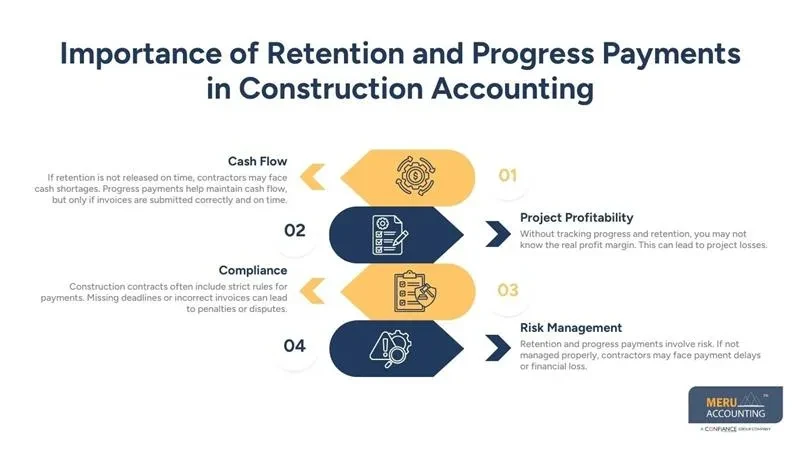
Importance of Retention and Progress Payments in Construction Accounting
Retention and progress payments directly impact the financial health of construction companies.
Cash Flow Stability
Delayed retention releases can affect working capital. Proper tracking of progress payments ensures consistent cash flow during projects.
Project Profitability
Without accurate tracking of retention and progress payments, contractors cannot determine the true profitability of a project.
Compliance and Contracts
Construction contracts include strict billing and payment terms. Accurate accounting ensures compliance and reduces the risk of penalties or disputes.
Risk Management
Tracking retention and progress payments helps contractors avoid financial risks such as delayed payments, incorrect billing, and contract disputes.
Additional Details
| Business Type Supported | Meru Accounting |
